




Programmable Logic Controller (PLC) Solutions for Startups
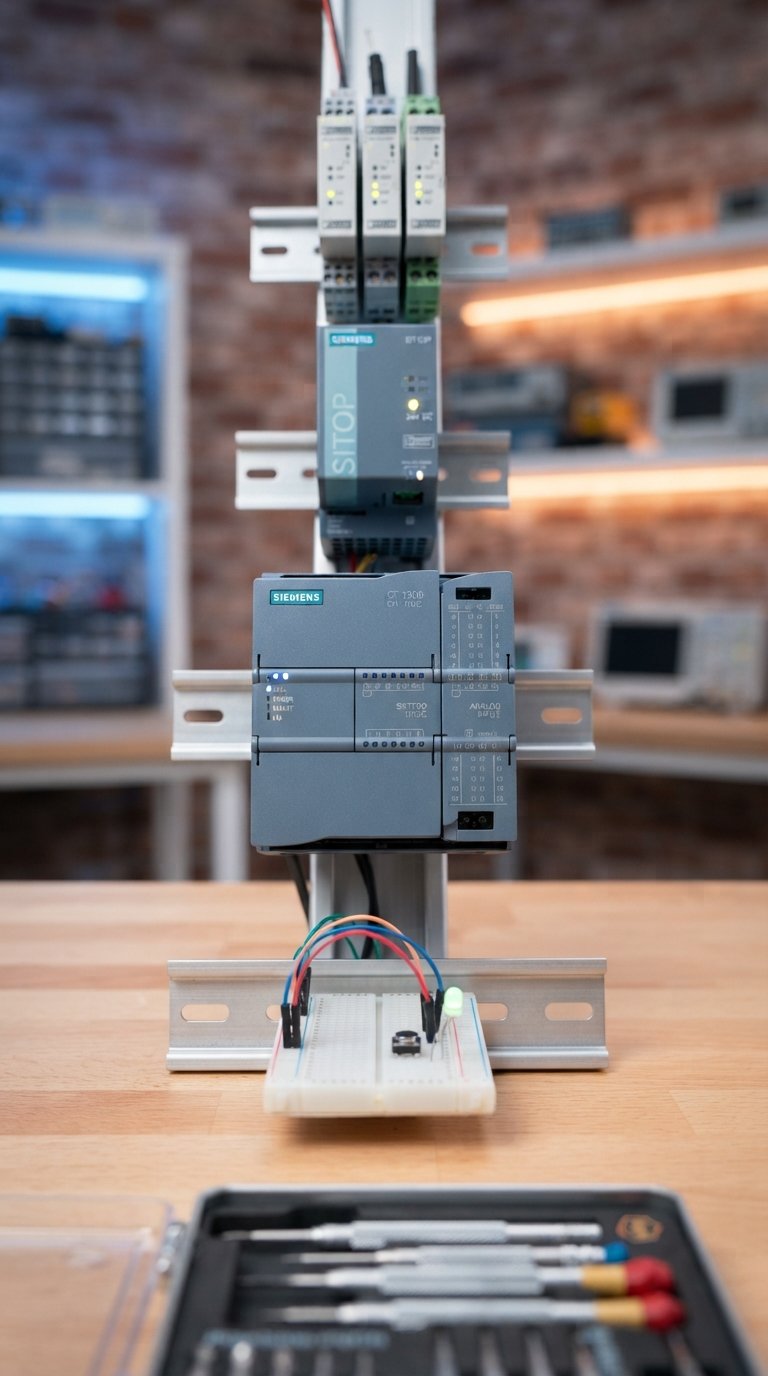
Startup-Focused PLC Design & Automation Solutions
Building an automation solution for a startup requires striking the right balance between low-cost, modular hardware and standard programming software—keeping your initial overhead strictly manageable without compromising performance.
Core Steps in PLC Solution Development
- 1. Requirements Gathering: Meticulously map out your machine’s exact inputs (sensors, push buttons) and outputs (motors, valves, alarms) before investing in hardware.
- 2. System Design & Architecture: Select the ideal industrial controller and build clean, modular control logic to simplify maintenance and ensure future upgrades are hassle-free.
- 3. Programming: Leverage visual languages like Ladder Logic (standardized under IEC 61131-3) which mimic traditional electrical relay diagrams for straightforward troubleshooting.
- 4. Testing and Debugging: Rigorously simulate or bench-test your code logic prior to connecting physical machinery to safeguard expensive equipment.
Startup-Friendly Hardware & Software Options
Cost-Effective Platforms: We implement Micro-PLCs and open-source-friendly controllers (such as the Siemens S7-1200, Allen-Bradley Micro800 series, or modular CODESYS-based hardware) which provide a significantly lower entry barrier than massive enterprise DCS or ControlLogix architectures.
PLC software we use
Our custom PLC programming services
Initial Setup & Architecture Phase: Our expert engineering team handles the intricate, foundational details of configuring industrial processors, establishing rock-solid industrial communication protocols (such as Modbus TCP/IP, Profinet, and Ethernet/IP), and configuring modular I/O racks. We analyze your plant’s data throughput requirements to guarantee zero packet loss and minimal network latency.
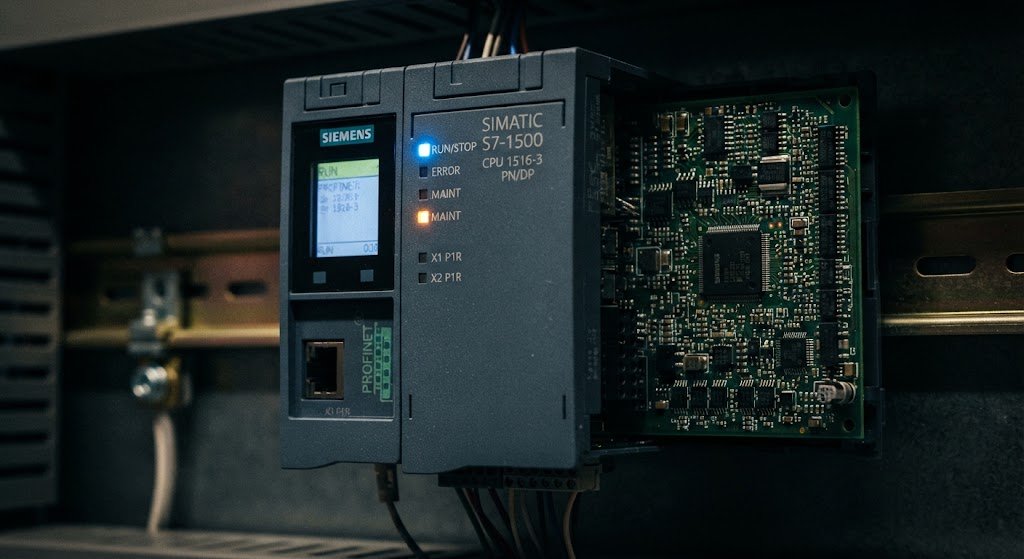
Operational Synchronization: Beyond simple hardware mapping, we make sure your controller’s central processing unit (CPU) and distributed expansion modules synchronize seamlessly. This rigorous synchronization delivers peak operating performance, stable clock cycles, and high reliability even under heavy, continuous industrial workloads.
Precision Signal Translation: We precisely map raw physical inputs and outputs to internal controller memory registers, bridging the gap between field sensors and your core software logic. Every discrete signal is meticulously allocated to eliminate addressing conflicts and ensure instantaneous scan-time response.
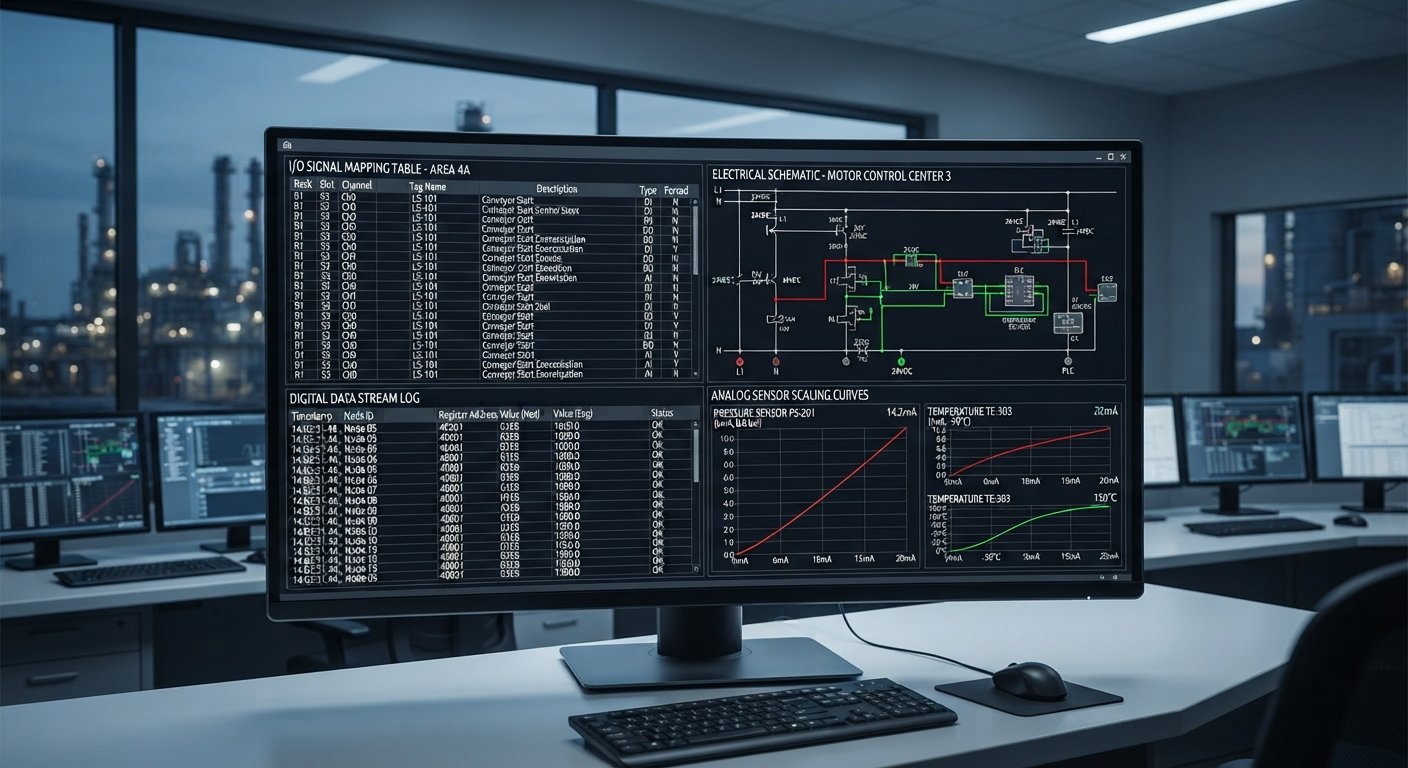
Advanced Analog Scaling: We configure complex analog signal scaling equations (handling standards like 4-20mA, 0-10V, and thermocouple inputs). This guarantees accurate, real-time conversion of raw electrical voltage/current inputs into clean, meaningful engineering units such as precise temperature degrees, PSI pressure levels, or liquid flow rates for your control algorithms.
Operator Control & Safety Overrides: During plant commissioning, routine maintenance, or emergency mechanical fixes, relying solely on automated loops can be hazardous. We program robust, highly intuitive manual override routines that give floor technicians granular, direct control over individual motors, pneumatic valves, heaters, and hydraulic actuators.
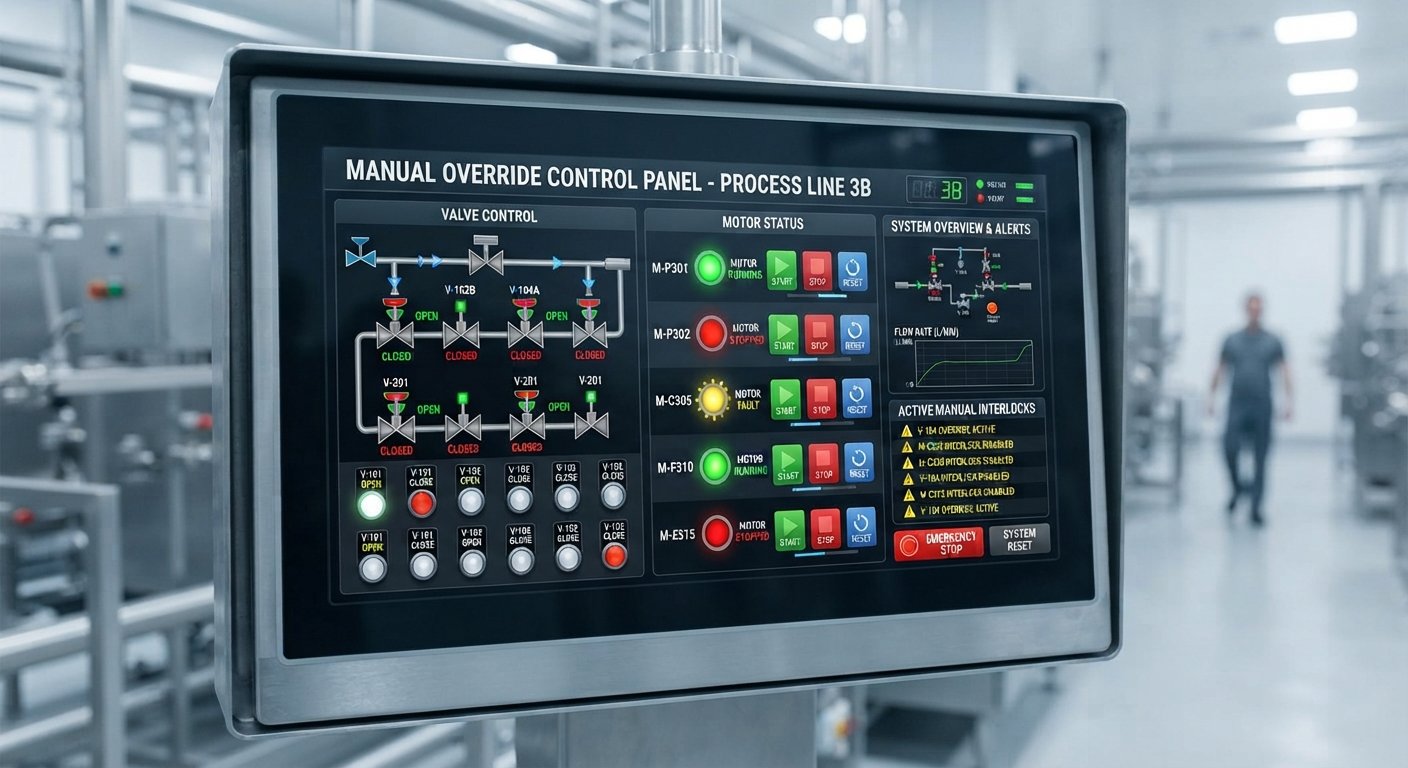
HMI Integration & Interlock Protection: These manual routines are directly wired into your Human-Machine Interface (HMI) screens with clear visual feedback indicators. Software-level safety interlocks are embedded even in manual mode, preventing operators from accidentally commanding conflicting physical states that could damage expensive machinery.
Automated State Machine Design: We design sophisticated, highly reliable automated operational sequences and state-machine logic that manage your entire production line cycle from initial power-up to final product delivery. Our code cleanly coordinates multi-stage timing loops, batch processing phases, and continuous product flows.
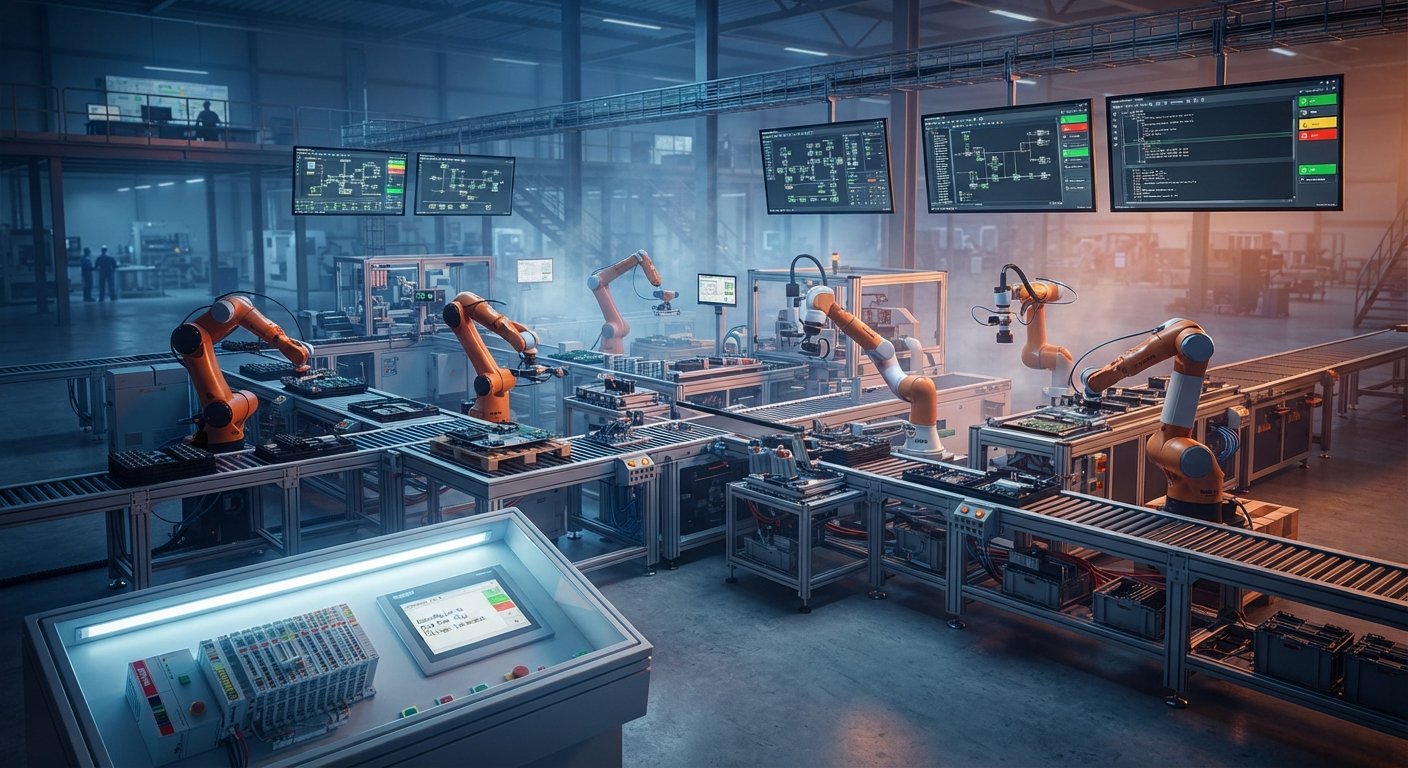
Graceful Shutdowns & Recovery: Beyond normal operations, our auto-mode architecture includes comprehensive exception-handling routines. The system intelligently handles sudden power drops, sensor timeouts, and safe recovery cycles, ensuring your production line resumes execution smoothly without manual intervention.
Dynamic Routing & Conveyor Logic: For complex material handling systems, multi-destination sorting lines, or automated guided vehicle (AGV) interfaces, we program precise path selection logic. The controller dynamically tracks product items and decides optimal routing paths based on real-time sorting criteria.
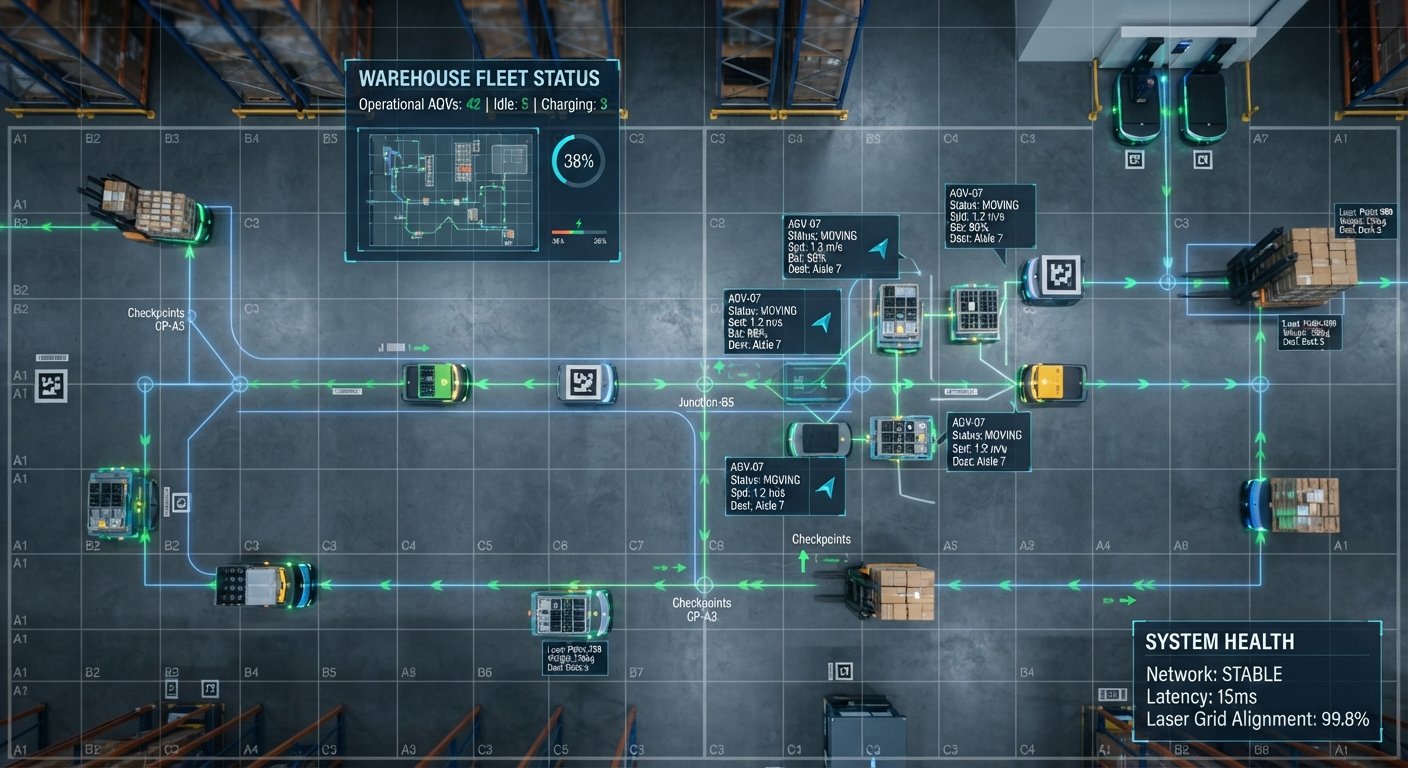
Pre-Motion Safety Verification: Before any mechanical diverter, robotic arm, or high-speed conveyor shifts position, our verification routines check clearance sensors, limit switches, and gate closures. This eliminates product jams, mechanical collisions, and costly physical damage to your handling equipment.
Proactive Fault Detection: Unplanned plant downtime eats into startup profits. We implement deep fault-detection algorithms that continuously monitor sensor drift, motor overloads, thermal thresholds, and pressure anomalies before they turn into critical failures.
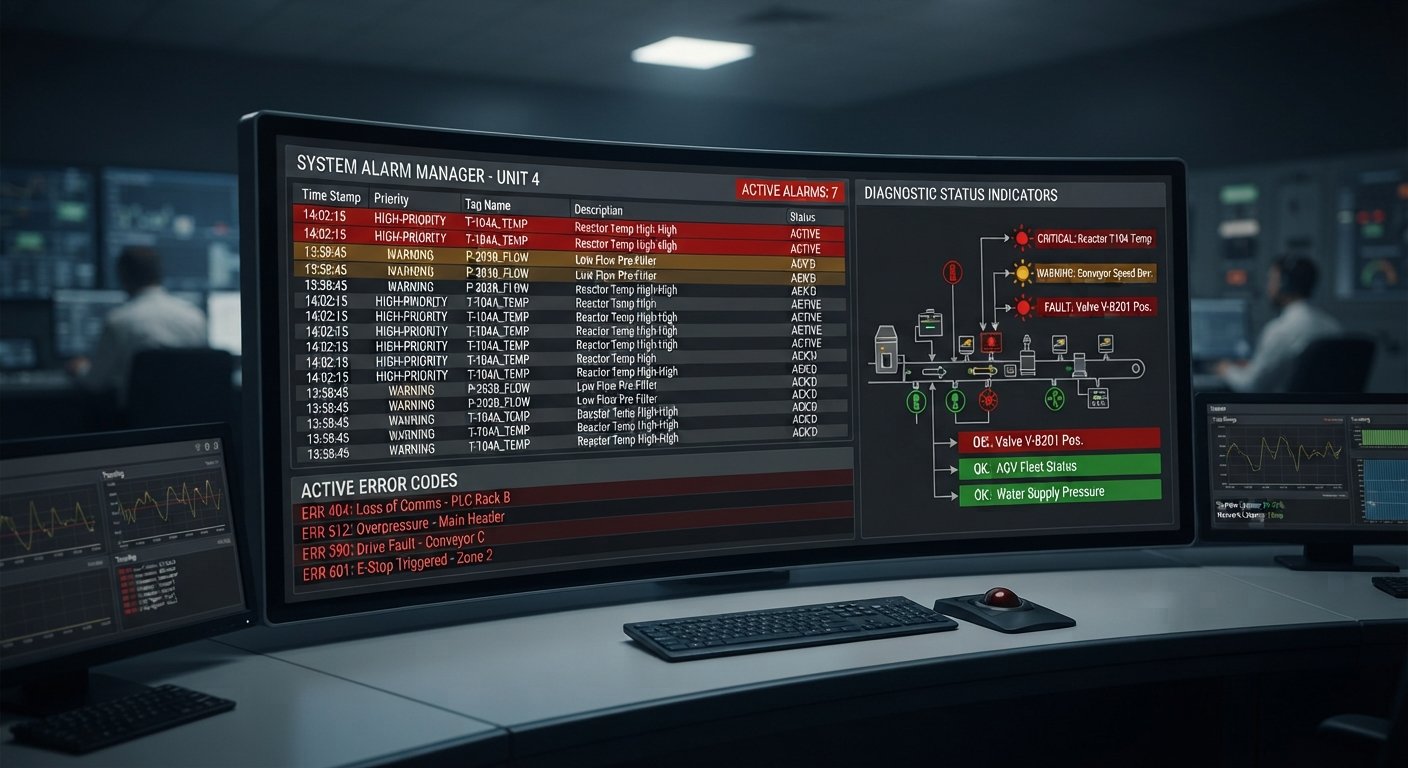
Real-Time HMI Notifications: We structure comprehensive alarm banner systems categorized by severity levels (Warnings, Faults, and Emergency Stops). Operators receive immediate visual banners and audible alerts with precise diagnostic text codes, drastically shortening troubleshooting time and boosting plant uptime.
Uncompromising Industrial Safety: Safety is the cornerstone of any automated machinery. We program rigid, fail-safe hardware and software interlocks that strictly prohibit conflicting or hazardous machine operations—such as starting a hydraulic press while safety enclosure doors remain open.
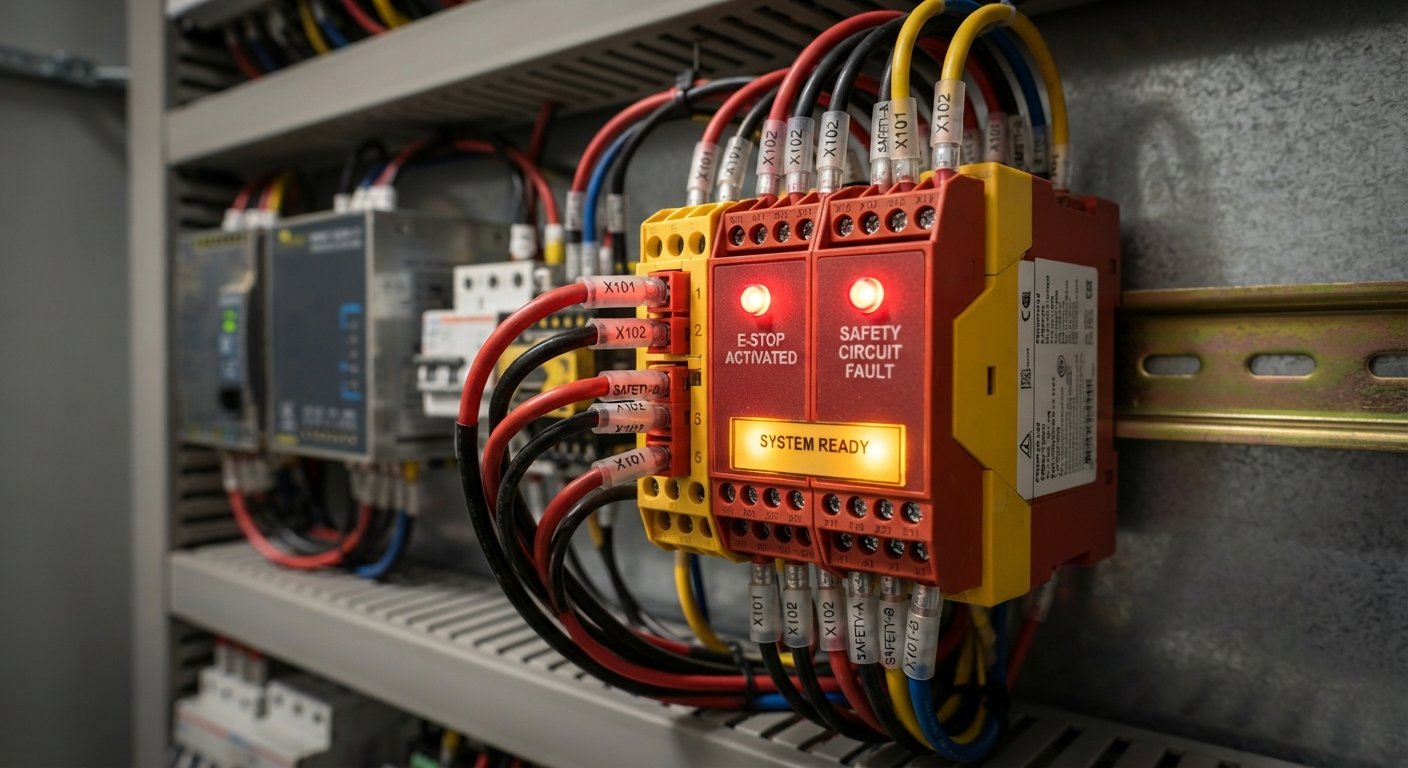
Diagnostic Messaging Layer: Alongside safety interlocks, we integrate clear text messaging protocols. Whenever an interlock trips or an emergency stop chain is broken, the HMI instantly displays the exact root cause (e.g., “Zone 3 Safety Gate Open”), allowing maintenance crews to clear issues instantly.
PLC programming development technologies we leverage

Ladder diagram (LD)
Our team uses ladder diagrams for intuitive, visual programming. This industry-standard method simplifies the development process, resulting in easily maintainable logic with quick troubleshooting.

Structured text (ST)
When it comes to handling complex calculations and data, we turn to structured text. This powerful, high-level language lets us create precise, efficient code, ideal for advanced PLC applications.

Function block diagram (FBD)
To visualize system functions, we map out function block diagrams. This approach keeps things modular, allowing us to reuse and maintain code across different projects.

Sequential function chart (SFC)
For step-by-step automation, our experts rely on sequential function charts to model process sequences. This method is perfect for keeping everything clear and straightforward — meaning smooth transitions between operations.

Instruction list (IL)
For low-level, efficient programming – especially in resource-limited systems — we use instruction lists. This text-based approach is ideal for situations where every instruction counts.
How much does it cost to develop a PLC?

Complexity of the system
The price of developing a PLC solution isn’t a one-size-fits-all situation, and can vary depending on a number of factors – including the complexity of the project, which PLC platform you choose, the scope of customization, and the level of support you’re looking for. At 9anddivine, we offer competitive pricing for our PLC programming services, customized to fit your budget and needs. Contact us today for a personalized quote based on your project and its unique requirements.

Scope of customization
Tailoring the software features, UI layouts, and automation loops to match specific workflow requirements.

Hardware requirements
Choosing between micro-PLCs, modular expansion racks, or high-end enterprise controllers.

Software licensing fees
Accounting for proprietary IDE environments, runtime licenses, and visualization software packages.

Testing and validation
Rigorous offline simulation, I/O mapping verification, and virtual commissioning cycles.

System integration
Connecting PLCs seamlessly with SCADA systems, HMIs, third-party sensors, and cloud telemetry.

Support and maintenance
Long-term plant support, routine code backups, remote diagnostics, and emergency troubleshooting.
Advantages of PLC development services
Cost savings
PLC automation reduces labor costs, minimizes errors, and optimizes resource utilization, leading to significant cost savings and higher levels of profitability.
Compliance and regulation
PLC programming ensures compliance with industry regulations and standards, mitigating risks and maintaining a reputation for quality and compliance.
Flexibility and adaptability
PLC development services enable the customization and reprogramming of PLCs to adapt to changing requirements and technological advancements.
Improved safety
PLCs implement safety protocols, monitor critical parameters, and initiate emergency shutdowns — improving workplace safety and preventing accidents.
Data acquisition and analysis
PLCs offer real-time data acquisition and analysis capabilities, providing insights into process performance and enabling data-driven decision-making.
Remote monitoring and control
PLC development services enable remote access to PLC systems for monitoring and control, boosting operational visibility and making troubleshooting a whole lot easier.
Increased efficiency
PLCs automate industrial processes, leading to higher efficiency, reduced labor costs, and improved productivity.
Boosted reliability
PLCs are reliable and dependable in industrial environments, minimizing downtime and reducing the risk of equipment failures.
How we handle PLC programming
Requirements gathering
We kick things off by teaming up with you to get a solid grasp of your automation goals and what you're hoping to achieve.
System design
Based on these requirements, we'll then design a customized PLC solution tailored to your wants, needs, and preferences — focusing on making it scalable, flexible, and — of course — efficient.
Programming and implementation
Our experienced PLC engineers use the right programming platform for your needs to develop and implement the PLC solution — always sticking to your design specifications.
Testing and debugging
We carry out thorough testing and debugging sessions — combing through your PLC solution to make sure everything is running functionality, reliability, and performing just right under different conditions.
Deployment and integration
Once all the boxes in the testing stage have been ticked, we'll deploy the PLC solution and integrate it with existing systems and technologies.
Training and support
We provide comprehensive training and support to your team to make sure everyone's on the same page in terms of operating and maintaining the PLC system.
